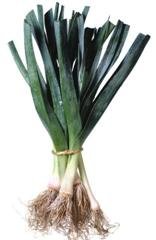
Organic Falltime Leek Seeds 25 Count Allium ampeloprasum var. porrum (Syn. Allium porrum) Description: Summer leek produces shanks up to 3 feet, but doesn't winter well in hard-freezing climates. Days to Maturity (Approx.): 85 Soil pH: 6.0 - 6.5 Light: Full Sun Soil Type: Rich, well-drained, deep sandy loam Known Pests: Not normally bothered by pests Sowing Leeks: Wait till early to mid-spring before sowing leek seed, depending on the weather. Add a fresh layer of rich compost to the top soil, then till or spade the bed to loosen the soil and work in the compost. Rake level. They can either be sown in a seed bed for transplanting the following summer, or sown in their permanent positions. Sow the leek seed thinly (about 1 inch apart), as germination is usually very good, in drills about 1/4 inch deep and cover the seeds with fine sifted soil. If the seeds are properly stored they will be viable for about four years, so you can keep seeds for future use. After covering the seeds, firm the soil down and water if dry. Drills should be about 6 in apart in the permanent bed. When growing leeks in a pot or indoor planting area keep in mind when they ought to be planted in your area, considering that leeks will take approximately 2 to 3 months to germinate. Care of Leeks: Water the young plants well, especially in dry conditions, until they are well established. Soon after planting apply liquid manure. Leaves which grow too long can be trimmed back slightly so that they do not rest on the ground. About Leeks: The leek (Allium ampeloprasum var. porrum (L.)) is a vegetable belonging, along with the onion and garlic, to the Alliaceae family, but the flavor is much more refined, subtle, and sweet than the standard onion. Also in this species are two very different vegetables: the elephant garlic (Allium ampeloprasum var. ampeloprasum), grown for its bulbs, and kurrat, which is grown in Egypt and elsewhere in the Middle East for its leaves. Uses: Organic Leeks look like large Green Onions. The thick white stalks and slightly bulbous roots of leeks are topped off by broad, flat, green leaves that wrap tightly around each other. Leeks are actually related to both onions and garlic, and contain a more subtle flavor and fragrance. Raw, they can be thinly sliced and added to salads, relishes, and salsas. Harvesting: Leek can be pulled when its base is 1 in circumference. Plants can be blanched by mounding soil around the stems as they grow. Selection, Storage & Handling: Organic Leeks are hand-selected for excellent quality. Choose firm stalks and avoid any yellow or brown spots. They should be fresh-looking and flexible. Store in the refrigerator, wrapped in paper towels for up to five days or more. Leek History: The leek, Allium porrum, is a member of the onion family, but the flavor is much more refined, subtle, and sweet than the standard onion. Thought to be native to the Mediterranean area and Asia, leeks have been cultivated for more than 3,000 years and have long been popular in Europe. After the children of Israel left Egypt, leeks were one of the foods mentioned in the book of Numbers in the Bible as being greatly missed. In France, the leek is known as Poireau, which interestingly enough is also a derogatory term meaning ""simpleton."" European chefs call leeks ""poor man's asparagus."" Asparagus is actually a distant relative of the leek, residing in the same Lily family as onions. Although giant leeks do not make for great eating, Britain holds a yearly competition and awards a prize to the largest leek, which can range from 4 to 5 inches in diameter. Wild leeks, also called ramps, are of a different variety. They are much smaller, more akin to small scallions or young shallots. Unlike the leek, they have a very strong aroma and flavor. Leek Legend and Lore: There is a lot of lore from many different cultures surrounding the leek. In 640 A.D., the Welsh wore leeks in their hats to distinguish themselves from the enemy during the battle between King Cadwallader of Wales and the Saxons. The leek became an emblem of pride in Wales, and Welshmen wear the leek to commemorate King Cadwallader's victory on St. David's Day, March 1st. Leek broth or cawl is the traditional meal for this day. The leek in Hebrew is called karti, which is a pun on another Hebrew word yikartu, meaning ""to be cut off."" Thus, the Jews eat leeks at Rosh Hashanah to symbolize a wish for enemies to be cut off. Nero ate leeks with oil regularly, thinking they were good for his singing voice. Perhaps Nero got the notion from Aristotle who claimed the clear cry of the partridge was due to its diet of leeks. ""